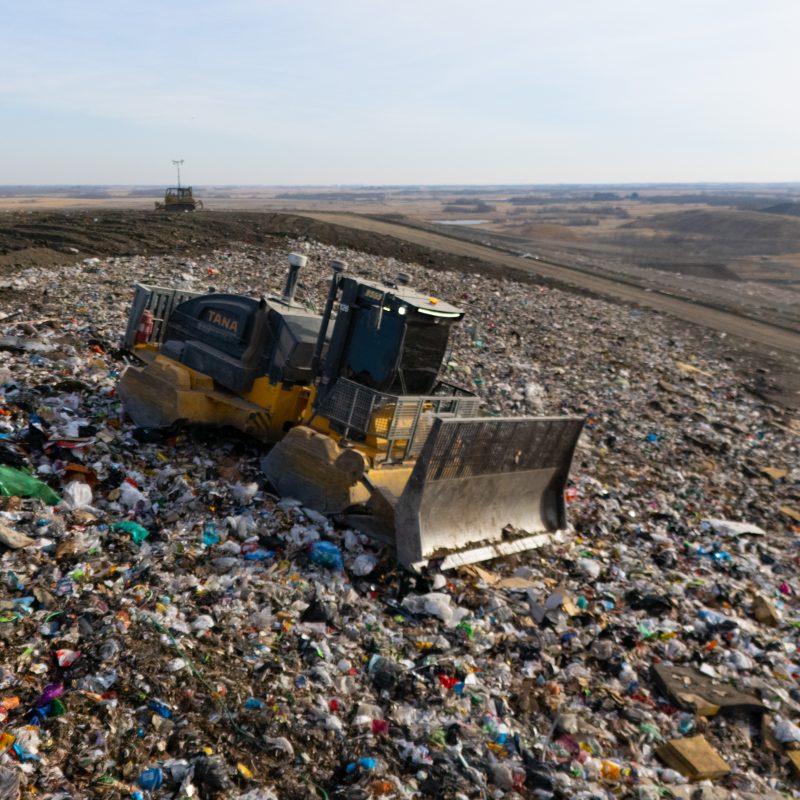
Smart Landfilling: Addressing the Crisis of Limited Airspace

By Industry Insights
Co-authored by Hannah Bledsoe & Charlie Nowak

It is no secret that airspace in North America is a limited resource, and unfortunately, there is no single, simple solution to the problem. However, there are practices that can significantly slow the rate at which landfills are filling up. In this article, you will find the necessary equipment, practices, and results of Smart Landfilling.

What is Smart Landfilling?

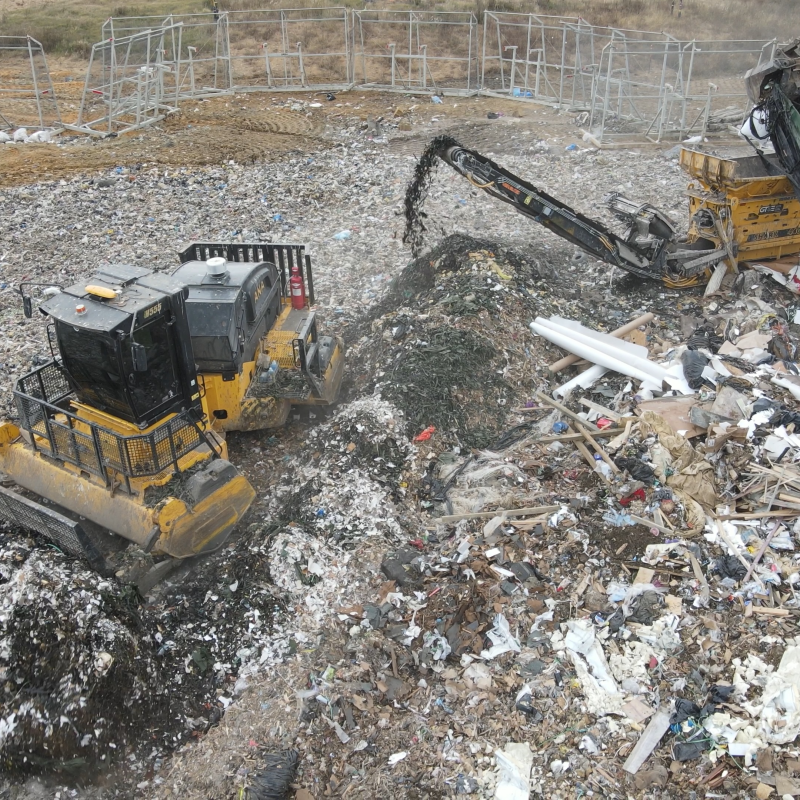
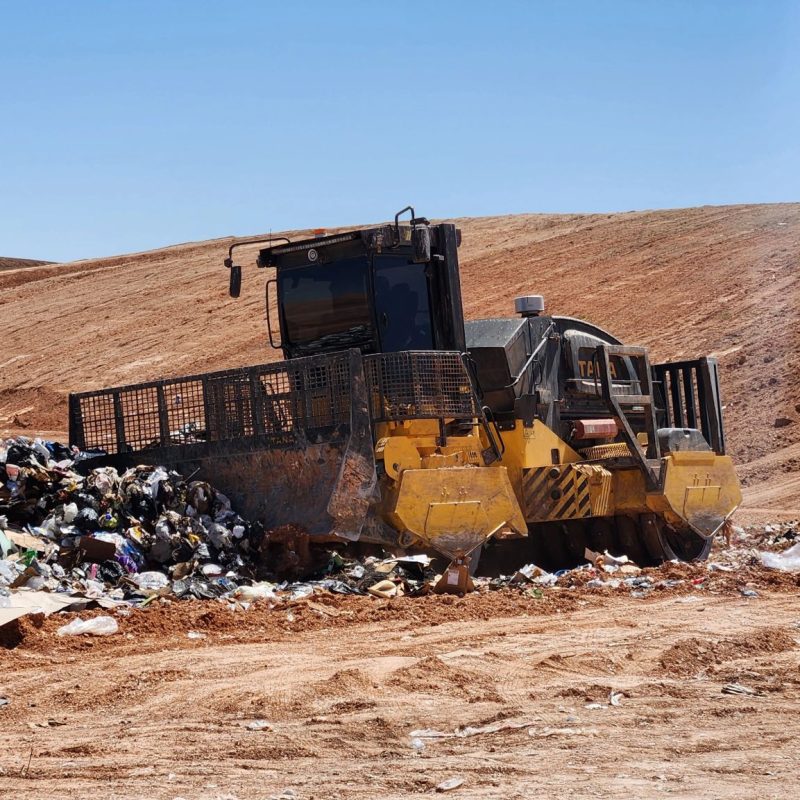
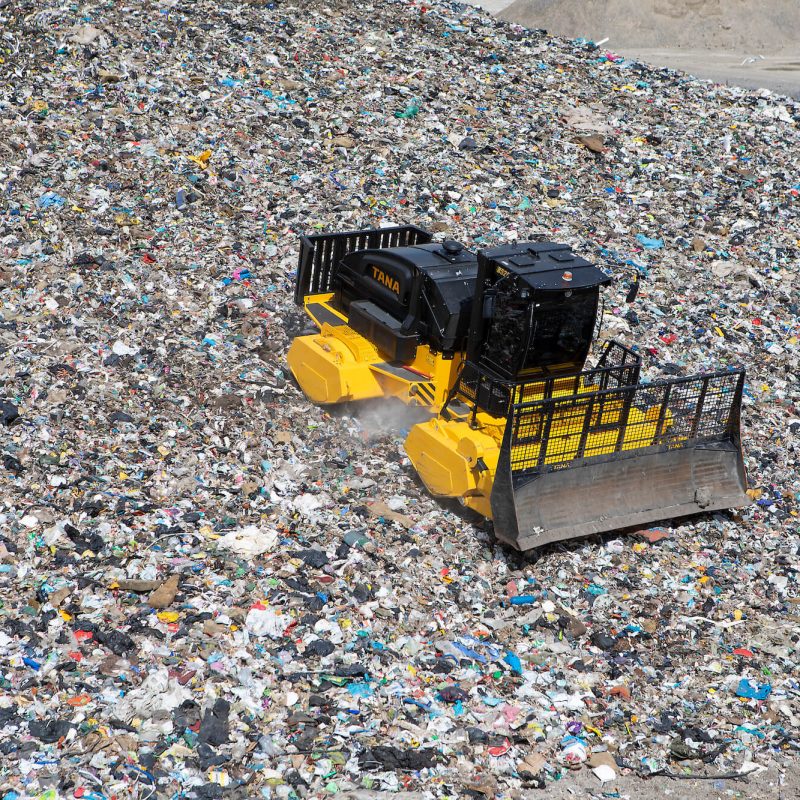
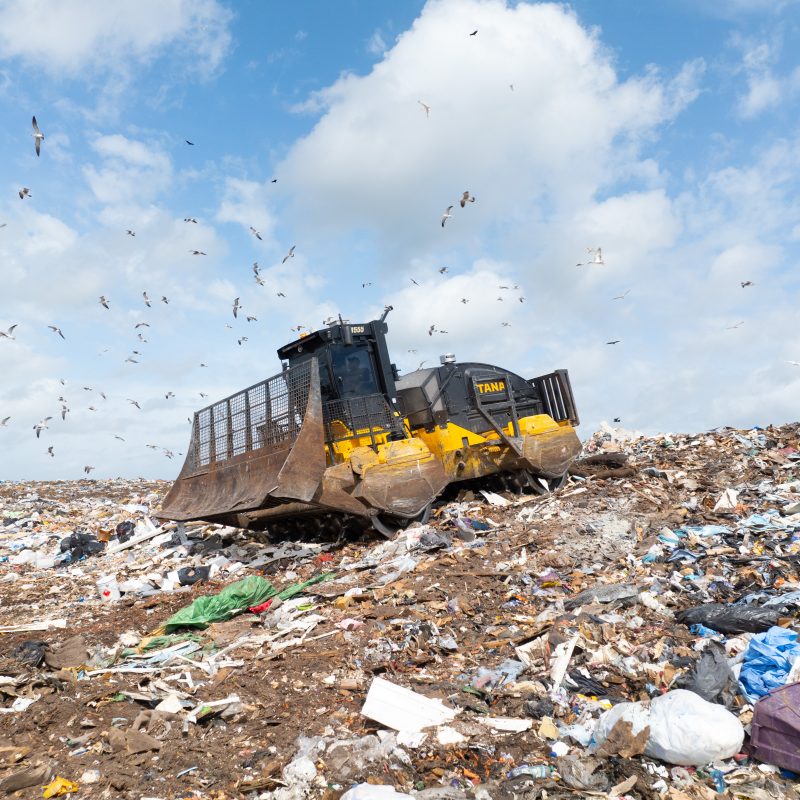
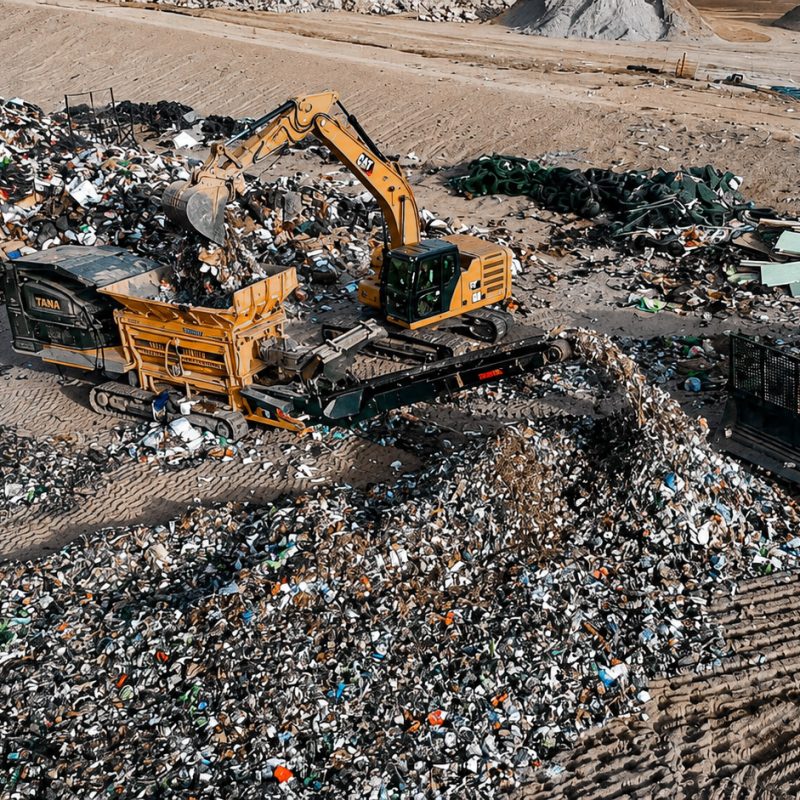
Smart Landfilling is the practice of shredding waste before compacting it. This reduces and condenses waste volume, especially bulky waste like C&D or mattresses. The shredded waste compacts more easily, resulting in higher compaction density rates, airspace savings, and more stable landfill cells. Shredding waste before it is pushed to the working face provides 25-45% additional compaction based on information provided by landfills that are utilizing “Smart Landfilling”.

How to Practice Smart Landfilling

Setting up an efficient landfill workflow is the first step. Trucks enter from the scale house and should be directed to a sorting and recycling area where waste may be diverted or sent to the working face, depending on the waste they are bringing in. A shredder should be positioned to the side of the working face so waste can be pushed to the shredder material handler. As waste is shredded, it should be pushed to the working face to be compacted. It is important to keep this area tight to reduce wasted fuel from pushing materials long distances, while still ensuring enough space to work safely and avoid traffic congestion.

The working face should be designed around the landfill’s daily tonnage, and a checkerboard design should be utilized. This saves airspace and operational costs by minimizing daily cover and lowering labor, fuel, hauling, and material costs. The minimum amount of daily cover should always be used, especially when covering with dirt. Using alternative daily cover (ADC) such as shredded materials (tires, wood, aggregate, fines, auto fluff), tarps, foam, spray-on slurry, green waste, or sludge is a more efficient practice. The waste will be compacted into the cell regardless. Repurposing it as daily cover eliminates soil and saves airspace.

Diverting materials consists of identifying and sorting the waste that is being brought in, then recycling or reusing the materials instead of compacting them. There is profit in removing materials such as ferrous metals and selling them to scrap facilities. Cost savings can also be found in removing materials such as tires, wood, green waste, cardboard, etc., and reusing the materials internally for ADC, leachate control, road construction, dust suppression, erosion control, and more. Airspace savings from diverting waste extend the landfill’s lifespan and long-term profitability.

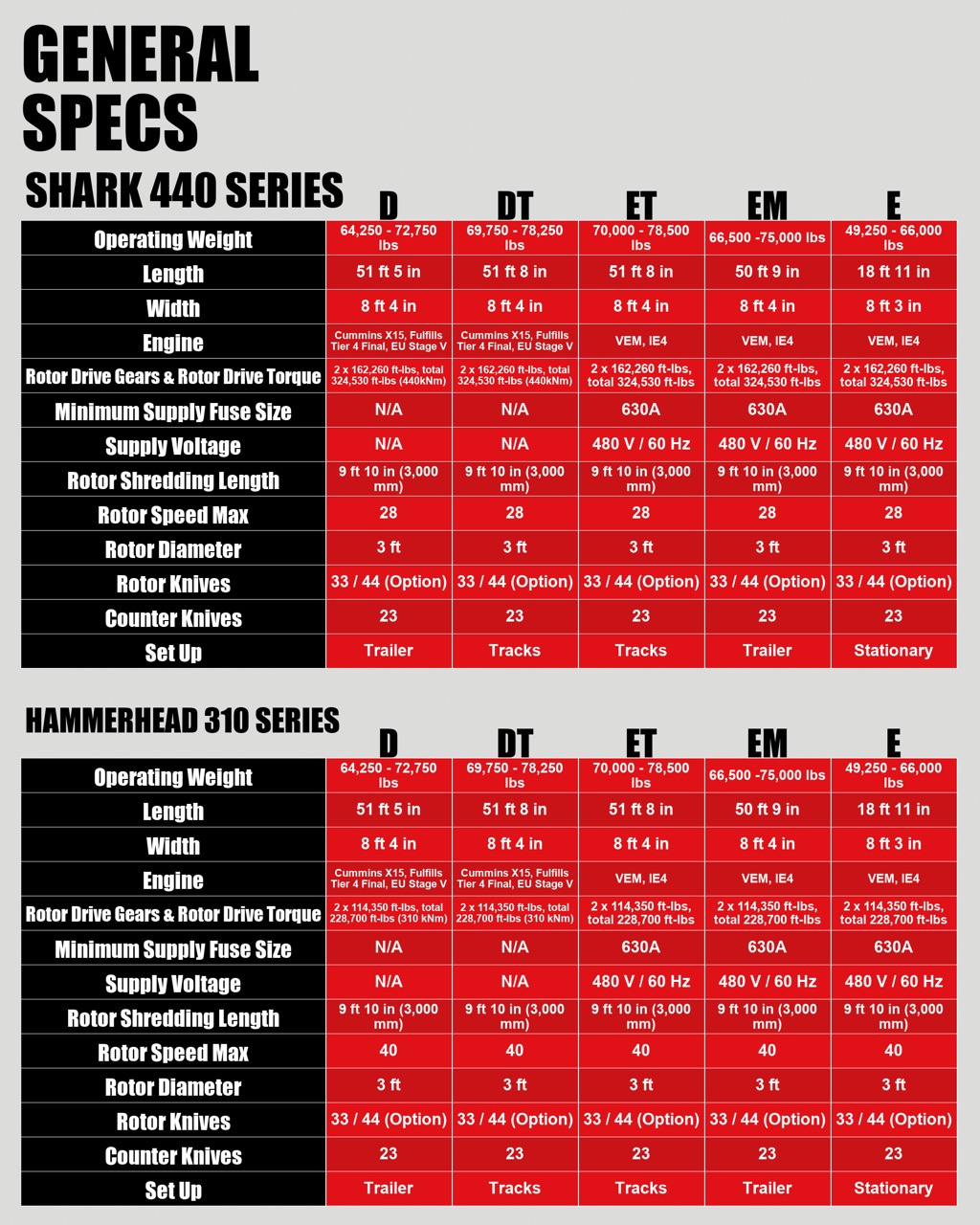
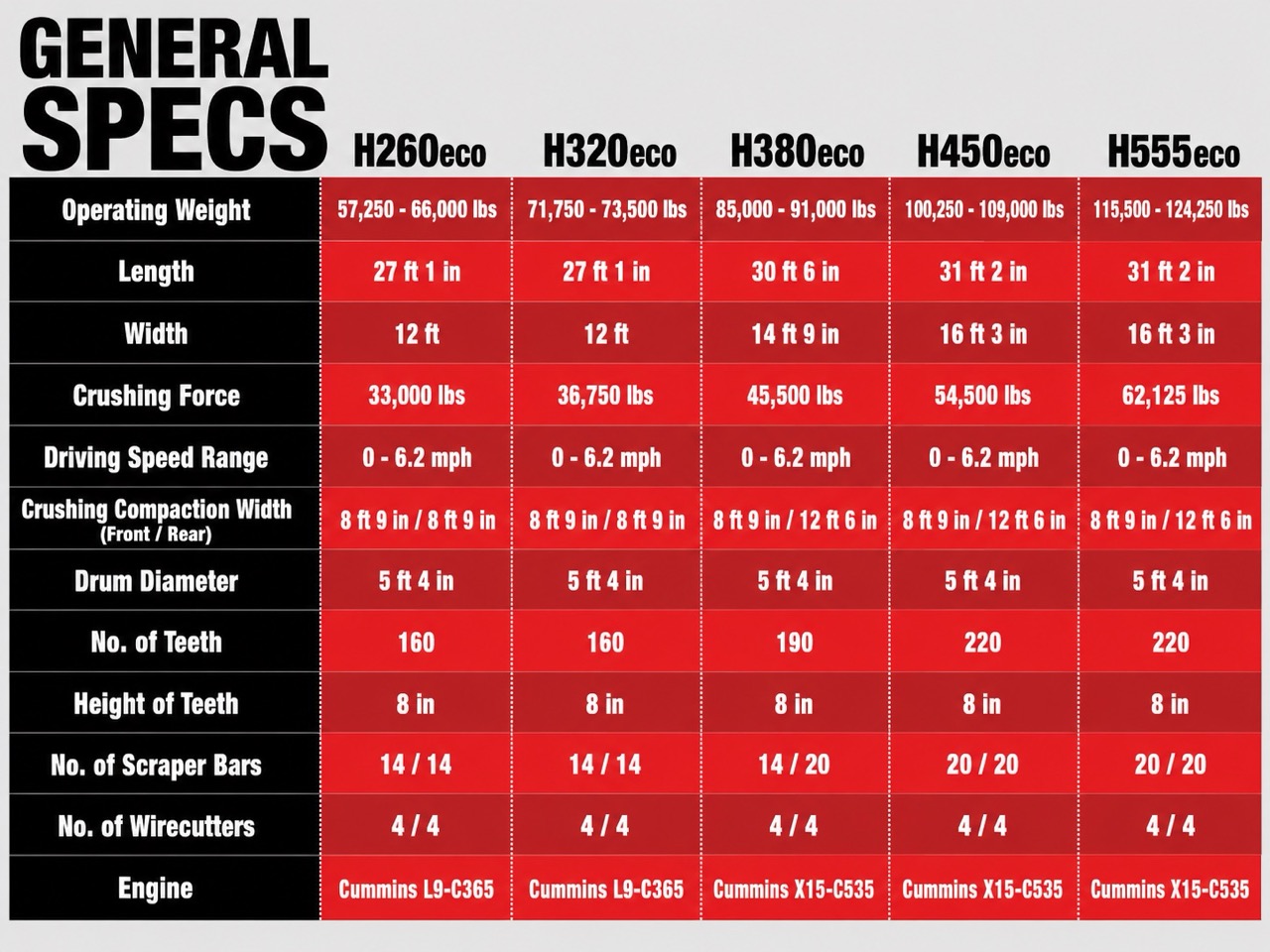
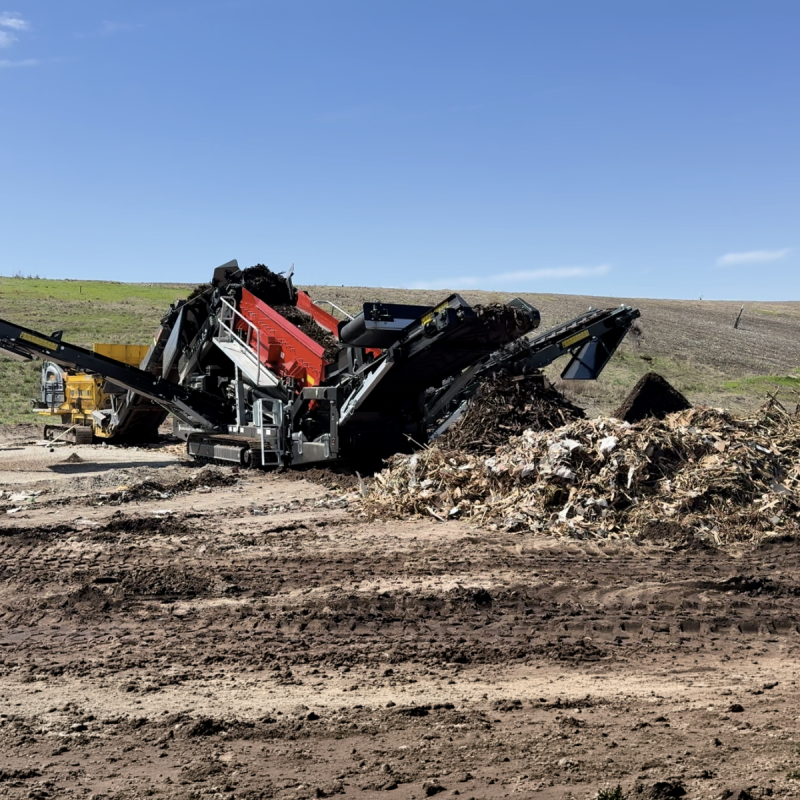
Utilizing efficient equipment also plays an important role in Smart Landfilling. A shredder with versatile shredding capabilities will be the most effective option, especially if your landfill processes a wide variety of materials. Selecting a landfill compactor with superior compaction performance can dramatically increase airspace savings. Some models deliver 10% + higher compaction rates than others on the market, which can help offset the cost of the machine. Depending on the size of the site, dozers may be used to push waste to and from the shredder, or a compactor with strong pushing power could be utilized. Separating equipment, such as trommel screens or recycling screens, can create cleaner waste streams and assist in diverting waste for additional airspace savings. Lastly, excavators, water trucks, track loaders, scrapers, articulated trucks, etc., will be needed based on operation size and operational preference.

Salem County Gets a 32% Better Compaction Rate by Smart Landfilling

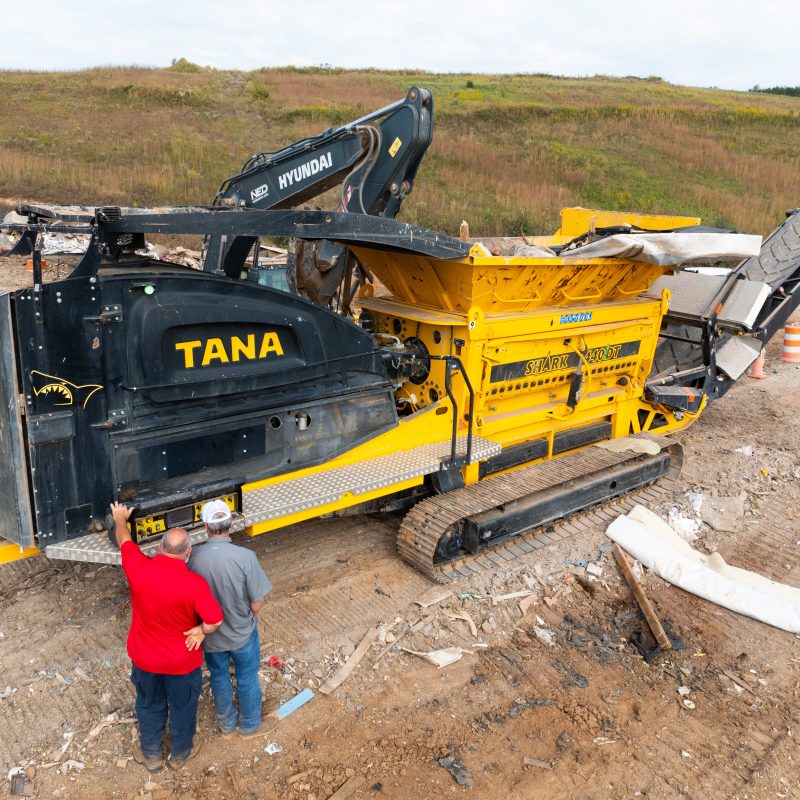
Smart Landfilling is not a theory, but a proven practice supported by real data. Salem County Improvement Authority (SCIA) located in Alloway, New Jersey participated in a “Smart Landfilling” study performed and analyzed by the Arm Group LLC in the fall of 2025. Their facility accepts approximately 100,000 tons of waste per year. The study was conducted for two weeks. The first week, all waste was compacted at the working face with a Tana H555 landfill compactor. The second week, C&D and other bulky waste streams were shredded with a Tana 440DT Shark shredder before being placed on the working face and compacted. The working face was surveyed at the beginning of week one, at the end of week one, and at the end of week two. The compactor also utilized a Carlson GPS system to track compaction density to compare against the survey data. At the end of the waste density study, it was concluded that shredding the waste before compaction resulted in a 32% better compaction rate compared to compacting all waste without shredding. Smart Landfilling at SCIA increased the waste density, leading to a more efficient utilization of the landfill’s airspace.

For additional information on the Arm Group LLC, visit: www.armgroup.net.

The crisis of declining airspace will not be solved overnight. But, as we move towards a permanent solution, Smart Landfilling can be applied as a more sustainable, cost-efficient practice to slow the problem. Shredding waste before compacting it, along with diverting materials away from the working face, results in more manageable particle sizes, higher compaction density rates, and more uniform, stable landfill layers. All of which significantly saves airspace and strengthens your bottom line.

Charlie Nowak has over five (5) decades of experience building, running, and closing landfills and transfer stations in North America. He currently works as a sales and product specialist for Humdinger Equipment. Humdinger Equipment is the North American distributor for the Tana waste products. Charlie has extensive experience in all phases of solid waste. He began working in the waste industry as a teenager and has worn many hats, including operating equipment, surveying landfills, water sampling, engineering landfill design, managing landfill operations and transfer stations, and consulting for hauling and landfills. He can be reached at 806-473-7371 or by email Cnowak@humdingerequipment.com.

Best Practices at the Working Face

By Industry Insights

Co-authored by Hannah Bledsoe & Charlie Nowak

You want to process the most amount of material at the lowest operating cost, using the least amount of airspace. Choosing the correct equipment for your working face and designing your working face correctly can increase the longevity of your landfill.

Safety is a Priority

The first thing to take into consideration is what safety equipment you have onsite. This is important not only for customers, but employees as well. Make sure that you have PPE available for customers and employees to wear. In addition, employees should have hearing protection as well as radios to communicate among personnel. Personnel should also clean glass and mirrors on any equipment prior to operating, so there are no distractions.

Your Most Valuable Asset

The most valuable asset at your landfill is airspace. Any equipment that you use out on the working face should be efficient in extending the life of each cell, and, therefore, the total life of the overall landfill. Typical equipment seen at an unloading zone on the working face, include tippers, walking floor trucks, commercial trucks, residential customers, and dump trailers. According to Benchmarking the Performance and Costs of MSW Landfills by SWANA, the total cost per acre is $1.2 to $1.5 million dollars.

Design

Design your working face around the average daily tonnage and plan ahead with engineering for a checkerboard design. The working face is the designated area where waste is unloaded. The checkerboard design minimizes the use of daily cover. At the end of each working day, daily cover is put down over the designated section (aka, the working face). The next working day, the neighboring section becomes the working face. This centralizes operations and this method:

  • Saves labor time and hauling time (daily cover must be hauled to the working face to be spread)
  • Labor, fuel, and material costs
  • Less daily cover saves airspace
The Right Machine for the Job

While there are many types of equipment used at the landfill such as track loaders, water trucks, scrapers or articulated trucks, and backhoe integrated tool carriers, there are three in particular that are used on a constant basis: dozers, landfill compactors, and excavators.

Landfills can vary in many ways so it is important to choose the right equipment for your landfill. By choosing the correct equipment, you will increase your landfill’s efficiency and profits. Things to consider when choosing equipment include:

  • The volume of material your landfill brings in (less volume landfills may use a compactor and track loader only whereas a larger operation may use all of the pieces of equipment listed above)
  • The type of material your landfill brings in (a C&D landfill may require heavy-duty tracks on equipment such as dozers to move through tougher debris like concrete VS MSW)
  • Whether your landfill has a tipper (small landfills without a tipper would not need to invest in a long-reaching excavator)

Dozers

With low operating cost to spread material, dozers push material to compactors in the landfill. They are also efficient in helping to build side slopes. When using a dozer in your operations, choose one based on your average daily traffic. In addition, choose a blade design best suited for your needs and consider low ground pressure design.

Landfill Compactors

As the most important piece of equipment on the working face, landfill compactors maximize the density of waste and optimize the life of each cell. Choose a machine that is the proper weight class for your site. Make sure to spread waste at the proper lift depending on weight class:

  • 60,000 lb class – 12 inches maximum
  • 90,000 lb class – 18 inches maximum
  • 120,000 lb class – 18-24 inches maximum

The greater the PSI, the greater the compaction. Choosing a compactor that achieves the greatest pressure on the trash will give the best density and will use the least amount of airspace.

It is also important to have proper ground clearance to avoid fire hazards and decreased compaction since three to four passes are best for compaction density. In order to help with maximum compaction, keep cleats clean.

Excavators

This type of equipment is best for moving waste from one point to another. They are especially efficient in working with stuck loads on the transfer trailer and working with load articulating trucks. We suggested that they have at least a 40-foot reach and consider using an extreme service bucket. There are center bars in the trailers. Waste will get caught on these bars that need to be removed while the trailer is in the tipper dumping the trash. An excavator with a longer reach will be beneficial in removing waste from these center bars. However, if a landfill does not have a tipper(s) then the longer reaching excavator investment may not be necessary.

Cover Material

Once you have gotten the most airspace out of a landfill cell, look at which cover solution will be best for the area. Daily cover is material placed on the surface to prevent waste from blowing trash, help reduce odors, lower fire risk, and scavenging from vectors (pests/animals). These could include soils, alternative daily covers, tarps, and spray foams.

End Results

Ultimately, you want to process the most amount of material at the lowest operating cost, using the least amount of airspace. Choosing the correct equipment for your working face and designing your working face correctly can increase the longevity of your landfill by reducing airspace (more profit and better sustainability), lower your operating costs (increases profit), and aid in a smoother operation and efficiency (customers unloading will be more organized)

Charlie Nowak is a North American TANA Sales Representative at Humdinger Equipment. Humdinger Equipment is the North American distributor for Tana. Charlie has extensive experience in all phases of solid waste. He began working in the waste industry as a teenager and has worn many hats, including operating equipment, surveying landfills, water sampling, engineering landfill design, managing landfill operations and transfer stations, and consulting for hauling and landfills. He can be reached at 806-473-7371 or e-mail Cnowak@humdingerequipment.com.

Diverting Waste from the Working Face

By Industry Insights

Co-authored by Hannah Bledsoe, Olli Honkamäki, & Charlie Nowak

Airspace can be considered the most important aspect of the landfill. The less material put into your landfill the greater your airspace savings are. In this article, you will learn sustainable practices to conserve airspace. This conservation will lengthen the life of your landfill and boost your bottom line.

Materials to Divert, Recycle, or Re-use

Valuable materials should be separated and diverted from the waste steam before they go to the working face. These recovered materials may be sent off to other facilities to be recycled or internally repurposed.

Materials:

Scrap Metal Recycling

  • Sell to Recycling Facilities
    • Ferrous metals such as steel or iron can be sold for profit.
    • High-value non-ferrous metals such as materials like aluminum, copper, and brass fetch higher returns.

Tires

  • Operational Uses
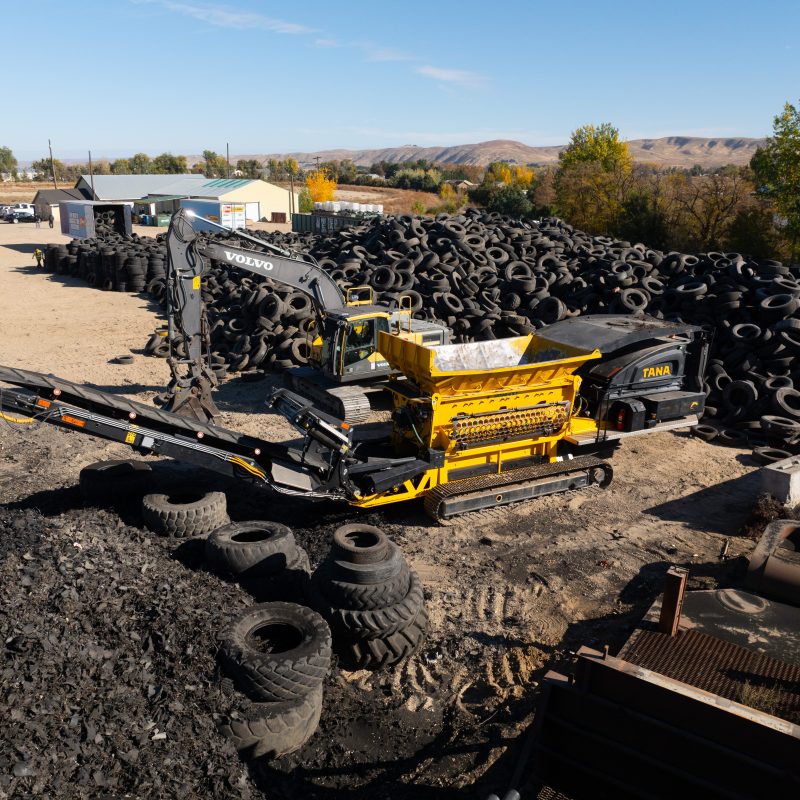
    • Alternate Daily Cover (ADC): Shredded tires reduce the need for soil while meeting regulatory standards
    • Drainage Systems: Chips work well in leachate and gas collection layers.
    • Road Construction: Use chips or rubber for road bases and dust suppression.
    • Erosion Control: Tires stabilize slopes and prevent soil loss.
  • Revenue-Generating Applications
    • Tire-Derived Fuel (TDF): Sell as fuel for power plants or cement kilns.
  • Specialized Uses
    • Temporary Fencing: Whole tires can be stacked as barriers or fencing.
    • Stormwater Management: Tires can serve as fill for wetlands or retention ponds.
    • Final Cover: Shredded tires or whole tires help anchor tarps or stabilize landfill covers.
    • Weather Erosion Control: Can be used with alternative cover tarp protection during high winds.

Wood

  • ADC: Shredded wood serves as an effective daily cover when mixed with soil or sludge.
  • Community Reuse: Shredded wood may be given away to the community as mulch or compost chips.
  • Road Maintenance: Chips provide cost-effective road bases and can be used for dust control.
  • Leachate Management: Wood chips enhance drainage layers.
  • Renewable Energy: Process unusable wood into biomass fuel for power generation or pellet production.

Concrete Aggregate

  • Road Construction: Crushed concrete is durable and cost-effective for road bases or repairs.
  • Site Development: Concrete aggregate can be used as a backfill for constructing buildings or creating access pads and work zones.
  • Erosion Control: Reinforce slopes or embankments to prevent soil erosion.

Fines

  • ADC: Fines are cost-effective for daily cover, meeting odor and pest control standards.
  • Soil management: Fines may be used to enhance soil structure in erosion control or landscaping applications.

Cardboard

  • Recycling: Cardboard can be sent to paper recycling plants for a profit.
  • Business Partnerships: Collaborate with local businesses to establish a reliable supply of recyclable cardboard.
  • Composting: Some types of cardboard can serve as a carbon-rich material for compost.

Alternate Daily Covers

Alternate daily covers are materials, besides soil, used to cover the working face outside of operating hours. This cover reduces waste from blowing, suppresses smell, and deters vermin. Each working day, the cover is removed or compacted over to continue building the trash cell.

  • Examples of alternate daily covers are –
    • Foam
    • Spray on slurry
    • Tarps
    • Shredded materials – Tires, wood, aggregate, fines, auto fluff
    • Compost or green waste
    • Contaminated soil and sediment
    • Sludge

Soil for daily cover incurs costs from excavation equipment or outsourcing soil. Choosing to utilize alternate daily covers saves airspace by lowering the amount of soil that is used.  Foams, slurries, or tarps will incur additional costs to the landfill but take up less space than soil. Shredded waste will find its way into the landfill cell regardless… Why not repurpose it as a daily cover instead of compacting it and adding a layer of dirt? This results in less material being compacted and saves overhead costs.

Design and Equipment

To effectively divert waste, a sorting and recycling area should be established before the working face. Trucks unloading waste can be directed either to the sorting area or working face, depending on the type of waste. Recyclable materials should be unloaded at the sorting area, where they will be screened into the appropriate categories and shredded if applicable. Non-recyclable waste, on the other hand, will be sent directly to the working face for disposal.

Equipment like trommel screens, recycling screens, picking stations, eddy currents, and air separators can be employed to separate materials for recycling or diversion, reducing landfill waste. A shredder will be needed if shredded waste is used as daily cover; though costly, it can improve compaction rates by shredding waste before compaction. Foams and slurries require specialized spray equipment, and tarps need a roller that integrates with the compactor.

Equipment at the working face should be optimized to extend the lifespan of each cell, thereby enhancing the overall longevity of the landfill. To maximize efficiency, the equipment must be appropriately sized to handle the daily tonnage and types of waste. Landfills typically use a variety of machinery, including track loaders, water trucks, scrapers, and backhoes. However, three essential machines are always present at the landfill: dozers, landfill compactors, and excavators. When selecting a landfill compactor, choosing one that delivers superior compaction can significantly improve airspace savings, with some models offering up to 10% better compaction rates compared to other compactors on the market.

Conclusion

Overall, effectively managing airspace is critical to extending the life of a landfill and improving its financial sustainability. By implementing practices such as waste diversion, using alternative daily covers, and investing in the right equipment, landfills can not only reduce the volume of material entering the site but also maximize the value of recovered materials. These practices require planning and upfront investment but lead to significant airspace savings, reduced operational costs, and long-term profitability.

Olli Honkamäki is a dedicated recycling and landfill consultant with extensive expertise in waste processes, recycling systems, and waste processing equipment. He specializes in transforming waste streams into valuable resources, helping organizations maximize sustainability and efficiency. A Finnish native from a country renowned as a global leader in recycling, Olli brings both technical knowledge and practical insights to his work. Since joining Tana Oy in 2010, he has played a pivotal role in advancing innovative waste management solutions globally. Olli can be reached at (806) 786-8506 or e-mail oh@humdingerequipment.com.


Charlie Nowak is a North American TANA Sales Representative at Humdinger Equipment. Humdinger Equipment is the North American distributor for TANA. Charlie has extensive experience in all phases of solid waste. He began working in the waste industry as a teenager and has worn many hats, including operating equipment, surveying landfills, water sampling, engineering landfill design, managing landfill operations and transfer stations, and consulting for hauling and landfills. He can be reached at (806) 473-7371 or e-mail cnowak@humdingerequipment.com.

The No Wrap Landfill Life

By Industry Insights

Co-Authored By Lee Lassiter & Dusty Zeigler

Wrapping in the landfill does not sound very rhythmic, but there is a whole lot of wrapping happening on the working face of landfills! Whether it’s wire, cable, rope, string, or even plastics, these materials seem to cling to all types of equipment traversing garbage in the fill, causing operators’ headaches. Hold your lyrics though, there is a landfill compactor out there that is designed for a “no wrap life”. The Tana Landfill Compactor, first built in the 1960s, is now ‘mashing’ trash in landfills all over the world. Tana is said to be the world’s first compactor designed for the sole purpose of saving airspace, and it certainly uses its engineered efficiencies to do just that!

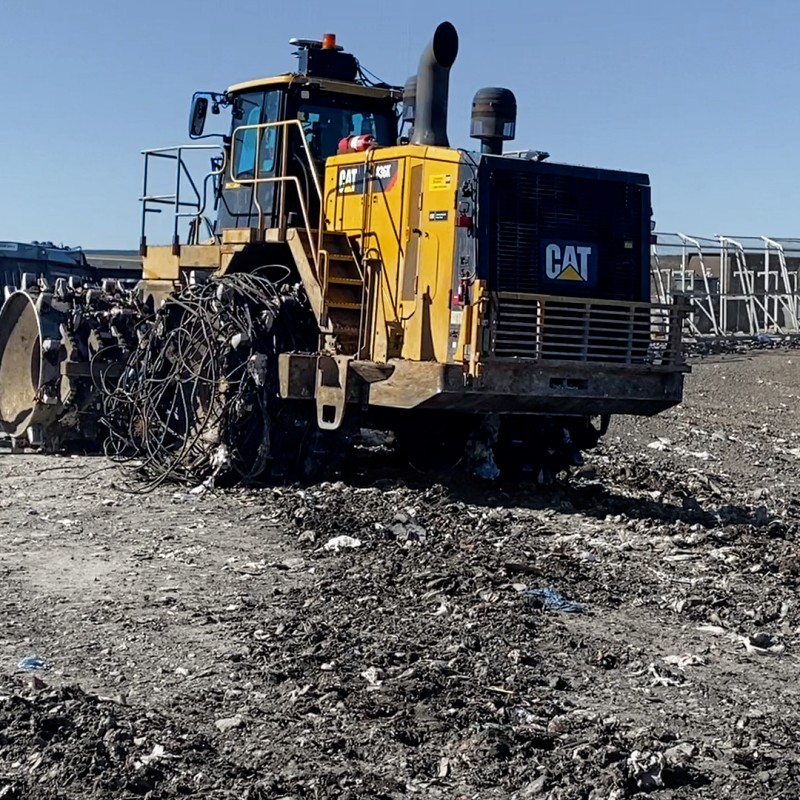
The always obvious difference about Tana is the tandem full-width drums, which together are the most essential features of the machine. Comparably, three and four-wheeled compactors are prone to material blow-out and materials wrapping in between wheels. With Tana’s Drums, the space between wheels is eliminated, allowing the full-width drums to elude the dangling wrappers!

So, what if the drum cleats pull that proverbial intertwined ball of fence wire up toward the drum housing? Well, between each corrugation of drum cleats, there are cleaner bars on both the front and rear of the drum. In a peeling-like fashion, these cleaners force the wire away from the drum housing as the drum rolls. Much like presents on Christmas day, it is a swift unwrapping. Cleaner bars are typically set closer than 10 mm and adjusted periodically. Let’s not forget the flat bar steel drum guards underneath the housing, which disallow materials from infiltrating the interstitial space.

*Same landfill pictured above

Grab your tortilla maker… There are Wire Cutters mounted on the front and back sides at the end of each drum. Set at less than 3 mm and adjusted periodically for maximum efficiency, these cutters capture wire while using the weight and force of the machine’s hydraulics to provide strong and constant cutting action.

Though Tana stands on a squatty 66” inch diameter drum size, the 2 feet 9 inches of Ground Clearance is a very lofty comparison to other compactors.  There are no underside mechanical gearboxes or drivetrain systems for wrappers to become lodged for a day’s ride around the landfill. Farewell to the shadow tail of mattresses, no more remoras hitching rides for a ten hour work shift. The Tana rolls right on over the foams and the wire coils.

Spotting out those wiry nests and cling-ons comes as an easy chore in the Tana’s cab due to its all-glass and forward cab mount design. Ensconced atop the forward section of the machine is the two-door high-visibility operator’s office, where the operator can see from eyebrows to bootstraps. Being able to avoid the snare before it happens eliminates downtime and the rigors of removing all wrap.

To learn more about Tana Landfill Compactors, visit https://www.humdingerequipment.com/products/landfill-compactor/. If you have questions about Tana landfill compactors or drum wrapping, contact your regional sales manager or local dealer, who can be found at https://www.humdingerequipment.com/sales-service/.

Smart Landfilling Starts with Smarter Waste Processing

By Equipment & Technology

Eastern Laramie County Solid Waste Disposal District’s approach to maximizing airspace while improving operational efficiency.

For landfill operators, some materials create challenges long before they ever reach final cover. Tires, mattresses, furniture cushions, and other bulky items can consume valuable space and create ongoing operational headaches. At Eastern Laramie County Solid Waste Disposal District in Burns, Wyoming, addressing those challenges became a key part of their approach to smart landfilling.

According to Manager Mike ‘Bubba’ Ragsdale, the goal is simple: maximize airspace while improving the efficiency of daily operations.

“By smart landfilling compaction, you save airspace,” Ragsdale explains. But as the team evaluated their operation, they realized compaction alone wasn’t enough. Bulky materials were still creating problems within the landfill.

“When you bury that stuff and don’t shred it, it won’t stay buried,” Ragsdale says. “We had to find some way of getting rid of that stuff, and shredding seemed to be the best way to do it.”

Eastern Laramie County initially saw significant gains through improved compaction practices, achieving significant airspace savings. After adding shredding to their process, those savings increased even further.

“When we started shredding, that increased another 30%,” Ragsdale says. “So we’re getting 60% savings on airspace.”

For Ragsdale, seeing the impact firsthand changed his perspective on what was possible.

“It didn’t convince me that it would make that much difference until we started shredding,” he says.

Beyond the airspace savings, shredding has also improved landfill efficiency by allowing operators to achieve compaction faster and more consistently. Technology has also become an important part of Eastern Laramie County’s smart landfilling strategy. By utilizing the Carlson GPS system integrated into the TANA equipment, the team can monitor cut and fill activity while also tracking compaction data across the site.

“Not only can we determine what our cut/fills are, but what our compaction is,” Ragsdale says. “It saves time, money, fuel.”

For landfill operators facing growing volumes of waste and increasing pressure to maximize capacity, Eastern Laramie County’s experience highlights a key principle of smart landfilling: better processing leads to better results. By combining shredding, compaction, and technology-driven site management, the district has been able to reduce waste volume, improve operational efficiency, and make better use of every cubic yard of available air space.

As Ragsdale puts it, “It’s just a lot better machine than any other compactor that I’ve ever been in.”

Tana Testimonial: Smart Landfilling in Eastern Laramie County

To learn more about Smart Landfilling, visit https://tananorthamerica.com/landfill-operations/smart-landfilling/.

Tana Shredder Takes C&D Landfill on the Brink of Closure to Below Capacity

By Equipment & Technology

In November 2020, Pickens County, South Carolina, had a problem on its hands: an overflowing landfill that was just two weeks away from closure by its regulatory agency. With a landfill exceeding its capacity by about 28,000 cubic yards, an urgent solution was required.

“We didn’t have any other options, so we started hauling materials,” recounts Steve Raines, Director of Solid Waste for Pickens County, as he looks back on the dire situation.

However, it wasn’t going to be nearly enough. At the landfill, they were still just barely trucking away enough materials to keep up with what was coming in. Since hauling things away wasn’t enough to meet regulatory compliance, the excess volume had to be dealt with on-site. That’s when the Solid Waste Department, headed by Raines, started looking into shredders. They needed a machine that could handle the challenging materials that were coming in.

“We looked at over 700 shredders, and Tana was the only one that they told us you could put a mattress in, so that’s the one we demoed. Within three weeks, we had one ordered and, on its way, here,” Raines says.

The department began work with the Tana Shark Shredder, and it turned out to be a powerful tool. Not only did it help fix the overcapacity problem and meet regulatory compliance, but it was so effective that the landfill’s impending closure was avoided altogether. After six months of working with the shredder, the landfill was below capacity by 160-180 thousand cubic yards. Additionally, metals recovered from shredded materials helped cover the cost of the shredder and even purchase a second one.

“The great thing about the Tana shredder is it eats just about anything. We do brush, we do tires, we do mattresses. The list of things that we run through this machine is endless,” Raines says.

“Our budget is not very huge, so we needed to reduce our costs. Getting that shredder here on site meant we could reduce our trucking costs by about 70 percent. We also cut costs on manpower, fuel, and maintenance,” Raines adds.

According to Raines, access to knowledgeable customer support for the machine has been a big positive with Tana & Humdinger. Any questions are answered promptly and thoroughly by experts who know the shredder inside and out.

“Their customer service is bar none the best I’ve ever dealt with in the construction industry.”

Meanwhile, the scarcity of airspace for landfills is a worldwide problem. There’s not a lot of space left, so making the most use of the available real estate is imperative. The versatile Tana shredders are excellent for freeing up capacity, as Raines can attest:

“I would encourage anybody to look at the Tana shredder as an option to help save some of that airspace. We take care of just about every product that comes through the landfill with that machine, and it changed everything for us. It was a game-changer.”

Tana Testimonial: Pickens County Solid Waste, South Carolina

Smart Landfilling Slows the Rate of Filling

By Equipment & Technology

For modern landfill operators, efficiency means maximizing every inch of available airspace. At the Salem County Improvement Authority (SCIA), that mindset is what landfill manager Parker Smith calls “Smart landfilling” – finding ways to process material more efficiently, improve compaction, and ultimately extend the life of the landfill

“Everything to us is airspace,” Smith explains. “We only get so much of it we’re allowed to fill. So, the volume that we can fit in that airspace means a lot to us.”

For Salem County, which processes 400 to 500 tons of municipal solid waste (MSW) and construction and demolition (C&D) material each day, making the most of permitted landfill space is a constant priority. That focus led the team to rethink how material was being processed before placement.

Rather than relying on compaction alone, Salem County began combining shredding and compaction to better break down incoming waste. By reducing bulky material before it reaches the working face, the facility can create denser fills and make better use of available airspace.

When we shred in addition to compacting, we do see a reduction in how fast we’re filling,” Smith says.

The difference isn’t just something management sees in reports. Operators also notice it in day-to-day operations.

“The operators see that on a daily basis,” Smith says. “We’ve slowed down the filling of the airspace because we’re getting that much more volume.”

To support that approach, SCIA turned to Tana equipment after visiting other facilities, demoing machines, and evaluating the performance in real-world environments. Beyond the machine efficiency, Smith says one of the biggest advantages came from using a shredder and compactor from the same manufacturer. Shared systems and service parts simplified maintenance and helped reduce complexity for the operations and service teams.

“Having the shredder from the same manufacturer, utilizing the same filters and the same everything we were already stocking on site, it was really a win-win” Smith says.

For SCIA, smart landfilling isn’t a buzzword. It’s a practical approach to getting more value from every load that enters the site. By pairing shredding with compaction and investing in equipment built specifically for waste operations, the facility is working to maximize airspace, reduce inefficiencies, and extend the lifespan of the landfill.

Tana Testimonial: Smart Landfilling in Salem County, New Jersey

To learn more about Smart Landfilling, visit https://tananorthamerica.com/landfill-operations/smart-landfilling/.